
By LYNETTE SOWELL-STEVENS
Cove Leader-Press
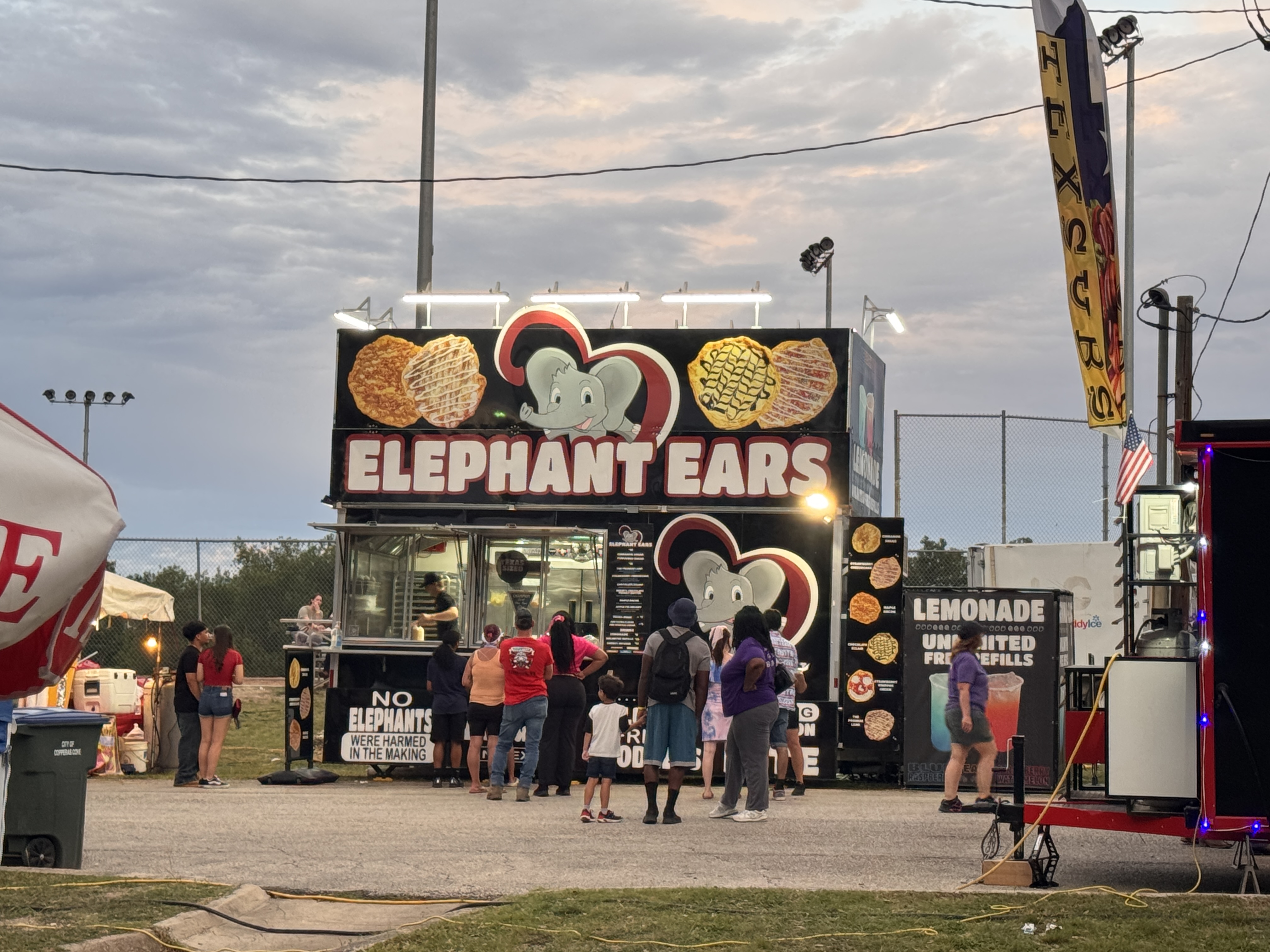
In Texas, the law for operating a food truck has changed from operators being required to obtain multiple local city and county permits to applying for one license that will be good statewide.
As part of House Bill 2844, the Mobile Food Vendor Regulatory Consistency Act, food truck operators must apply for one permit from the Texas Department of State Health Services (DSHS).
The DSHS-issued license is valid for one year. Prior to this, food truck owners paid permitting fees for each city they visited when operating their trucks.
There are now three different types of licenses for depending on the kind of preparation: Type One MFVs do not sell time and temperature safe (TCS) foods and are deemed a “low risk”; Type Two applies to MFVs selling prepackaged TCS food with limited handling and preparation needs, TCS food prepared to order and served for immediate consumption and whose processes include preparing, cold holding, thawing and/or reheating commercially processed or packaged products; and Type Three MFVs prepare, cook and serve food and processes include hot and/or cold holding, thawing, cooking, cooling or reheating.
Application fees range from $308 for the type one MFV, to as much as $876 for the type three MFV, plus a $500 pre-inspection fee regardless of MFV type.
Larissa Hall, owner of Rissy’s Slappin’ Sips & Bangin’ Bites in Copperas Cove has operated a mobile food truck for a number of years and presently calls the Taste of Cove Food Truck Park home for her business.
On Wednesday, the food truck owner took to social media explaining to customers about the new law and that she needed to apply for the new license – that same day, to the tune of approximately $1,400. On Wednesday, her truck remained closed.
“Every food truck that has a permit in the state of Texas expired last night due to a new law. To continue to work we all must get a new permit costing us $1400 today, Many of my fellow food truck family will be closing there doors for a while to regroup. Rissy’s is trying to find a way to stay open and get this paid,” Hall wrote on her business page. “I’m reaching out to anyone that might want to place an order for a gallon of lemonade in hopes that I can keep Rissy’s open. It would be so appreciated. I will be closed today to try and figure this out. We are very grateful for all the love and support everyone has always brought to us.”
After applications are processed, MFVs will be contacted by Texas DSHS to schedule a pre-licensing inspection.
There are two categories of pre-applicants: those with existing licensing from a local health department that can still operate so long as they can provide proof of the previous license, submitting an application and paying required fees and keeping a printed version of the application summary on the FVV at all times.
Those food trucks without a current license cannot operate until the pre-licensing inspection is completed.
The City of Copperas Cove issued a media release on Tuesday stating that that vendors with current permits issued by the city may continue to operate while their DSHS application is being processed.
However, food truck operators must provide proof of their current local permit and have a printed copy of their application summary and payment receipt in their food truck at all times.
But that’s not the only new fees for local food truck vendors for Copperas Cove. One more for Copperas Cove is likely to take effect on Oct. 1.
During the June 25 city council workshop, councilmember Jack Smith asked how this state change would affect the Fire Department.
The workshop discussion concerned changes to the city’s fee schedule for fiscal year 2026-2027, which begins Oct. 1, 2026.
The City is proposing a $50 food truck inspection fee.
“(This new state legislation) is related to the health inspection, like any restaurant would have,” explained Fire Chief Douglas Matthijetz. “What we do on the fire department side is, our fire marshal goes out and inspects these food trailers, because they must have extinguishing systems within their vent hoods and fire protection systems that are built into these. Most of them are operating off propane tanks and things like that. There’s a lot of other fire dangers that go with that outside of the realm of the health department.
“Our inspector spends anywhere from 20 minutes to 45 minutes with inspections and the administrative part of documenting it all, so we’re just trying to recoup the cost of his time.
“Just to be clear on that, if somebody in Copperas Cove has a food truck and they have their state license, they can go to Killeen, they can go to Austin, they can go to Round Rock, they can go to any other cities under that one health permit, but if that vendor wants to go to another city, they still have to fall under all their fire codes, so that’s where they would have to get the permit.
“If somebody from Round Rock or Austin wanted to bring a food truck into town, that’s fine to have the health department their permit, but they would still need to the guidelines for the fire safety and our fire codes that we have adopted.”
Chief Matthijetz clarified that these are not pop-up vendors with tents, but rather the mobile trucks or vehicles where food is prepared and sold.
- Log in or Subscribe to post comments.